When you leave reliable cell coverage, a satellite communicator can provide a vital link for emergency SOS alerts, location sharing, weather updates, and two-way messaging. The best choice depends on your route, communication needs, phone habits, and subscription budget.
We compared 10 notable devices across Garmin, ACR, SPOT, and Motorola to help backpackers choose practical off-grid communication without carrying unnecessary gear.
Best 10 Satellite Communicators for Backpacking Picks for 2026
Best Overall

- Two-way messaging and interactive SOS
- TracBack and digital compass navigation
- Up to 14 days of battery life
Best For: Backpackers wanting communication and navigation in a compact device
Best Emergency Beacon

- No subscription required
- Return Link Service confirms distress receipt
- Buoyant with visible and infrared strobes
Best For: Emergency signaling without recurring service fees
Best Bundle
Garmin inReach Mini 2 Flame Red

- Includes charger, adapters, cable, and power bank
- Two-way messaging and interactive SOS
- Up to 30 days at 30-minute tracking intervals
Best For: Backpackers wanting a complete charging and communication kit
Best Standalone Messenger
SPOT X 2-Way Satellite Messenger

- Two-way messaging to phones and email
- Dedicated U.S. mobile number
- Bluetooth pairing with Android and iPhone
Best For: Backpackers prioritizing two-way text communication
Premium Two-Way Satellite Communicator

- Global Iridium messaging and interactive SOS
- Color touchscreen with rugged IP67 design
- Up to 350 hours of battery life in tracking mode
Best For: Backpackers wanting multimedia communication, navigation, and long battery life
Simple Emergency Messenger
SPOT Gen4 Satellite GPS Messenger

- GPS tracking works beyond cell towers
- Dedicated SOS sends coordinates to responders
- Includes strap, carabiner, batteries, and USB cable
Best For: Backpackers wanting basic tracking, check-ins, and emergency alerts
Long-Battery Group Messaging

- Global two-way and group messaging
- Up to 28 days in tracking mode
- Interactive SOS and phone safety charging
Best For: Backpackers prioritizing long battery life and frequent text communication
Best Mapping Handheld
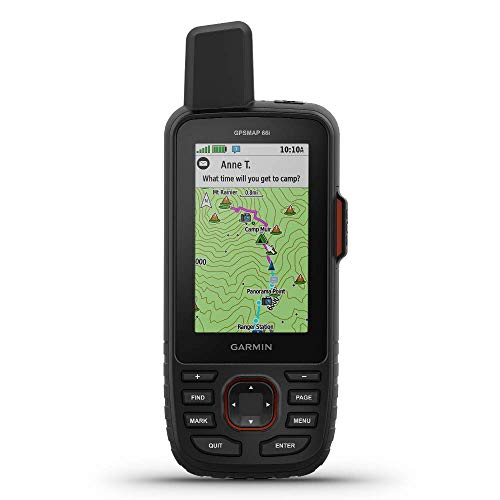
- 3-inch color display with TOPO maps
- Two-way Iridium messaging and SOS
- Up to 200 hours in Expedition mode
Best For: Backpackers who want detailed navigation alongside satellite communication
Best Group Tracking
ACR Bivy Stick Satellite Communicator

- Global two-way SMS and email
- GroupTrack supports up to 12 people
- 120-hour battery and IPX7 protection
Best For: Groups and families who want shared tracking and app-based communication
Best Lightweight Option

- Lightweight 2.5-ounce design
- Two-way messaging and SOS assistance
- IP68-rated rugged construction
Best For: Phone-carrying backpackers who prioritize compact emergency communication
Best Overall – Garmin inReach Mini 2
For most hikers comparing satellite communicators for backpacking, the Garmin inReach Mini 2 is a compact, versatile option with two-way messaging, interactive SOS, location sharing, and navigation features. It requires an active satellite subscription, but its Iridium-based global communication capabilities and up to 14 days of battery life in 10-minute tracking mode suit extended trips.
Best For: Backpackers who want messaging, SOS support, navigation, and location sharing in one lightweight device.
Pros:
- Two-way messaging and interactive SOS with 24/7 Garmin Response support.
- Compact, water-resistant design with Bluetooth smartphone connectivity.
- TracBack routing, digital compass, and Garmin Explore trip-planning integration.
- Up to 14 days of battery life in 10-minute tracking mode.
Cons:
- Requires an active satellite subscription for messaging, SOS, and location sharing.
- Small monochrome 1.27-inch display may be less convenient for detailed map use.
The Mini 2 is a strong all-around choice when you want communication and basic navigation without carrying a larger device. Its subscription requirement is the main ongoing consideration.
Best Emergency Beacon – ACR ResQLink 410 RLS
The ACR ResQLink 410 RLS is an emergency-focused alternative among satellite communicators for backpacking. It uses GPS, Galileo GNSS, and MEOSAR compatibility for positioning, and its Return Link Service confirms that Search and Rescue received the distress signal. Unlike messaging devices, it does not require a subscription.
Best For: Backpackers who prioritize emergency signaling and want to avoid recurring subscription costs.
Pros:
- No subscription required.
- Return Link Service confirms receipt of the emergency distress signal.
- GPS, Galileo GNSS, and MEOSAR compatibility support global positioning.
- Buoyant design with visible and infrared strobe lights.
Cons:
- Designed primarily for emergency signaling rather than two-way everyday messaging.
- Its operational battery life is listed at 24 hours.
- Does not provide the location-sharing and trip-planning features listed for the Garmin devices.
This PLB is a practical choice for hikers who mainly need a dependable distress beacon. Choose a two-way messenger instead if regular text communication or tracking is important.
Best Bundle – Garmin inReach Mini 2 Flame Red
This Garmin inReach Mini 2 bundle combines the communicator with charging accessories, a portable battery charger, and a USB-C cable. For backpackers comparing satellite communicators for backpacking, it offers the same core two-way messaging, interactive SOS, tracking, TracBack, and global satellite coverage described for the Mini 2, with extras intended to simplify charging in the field.
Best For: Backpackers who want a Mini 2 kit with multiple charging accessories and a portable power bank.
Pros:
- Includes a USB-C cable, charging adapters, car adapter, and portable battery charger.
- Two-way messaging and interactive SOS through the Garmin Response coordination center.
- Up to 14 days of battery life in default 10-minute tracking mode, or up to 30 days at 30-minute intervals.
- IPX7 water resistance and MIL-STD-810 construction.
Cons:
- Requires a satellite subscription for its communication services.
- The listed bundle weight is 1.3 pounds, which may be more than the communicator alone.
- Some bundle accessories may be unnecessary if you already own compatible charging gear.
The bundle makes the most sense when you need a ready-to-charge package for longer trips. Compare its included accessories and listed weight with the standalone Mini 2 before buying.
Best Standalone Messenger – SPOT X 2-Way Satellite Messenger
The SPOT X is a two-way satellite messenger with Bluetooth pairing and its own dedicated U.S. mobile number for receiving messages. It can send messages to cell numbers or email addresses, transmit GPS coordinates, and connect users with 24/7 Search and Rescue services. A service plan is required.
Best For: Backpackers who want two-way messaging with a dedicated number and Bluetooth phone support.
Pros:
- Two-way messaging with cell numbers and email addresses.
- Dedicated U.S. mobile number can receive messages when used as a standalone device.
- SOS messaging supports back-and-forth communication about the emergency.
- Bluetooth connectivity works with Android and iPhone devices.
Cons:
- Subscription required.
- Its listed 240-hour battery average is shorter than the Garmin Mini 2’s stated tracking endurance.
- Uses the Globalstar satellite network, so coverage considerations differ from Iridium-based devices.
SPOT X is worth considering if messaging is central to your trip and a dedicated number is useful. Its service-plan requirement and Globalstar network make coverage and ongoing costs important checks before purchase.
Premium Two-Way Satellite Communicator – Garmin inReach Mini 3 Plus
For backpackers who want robust communication beyond cell coverage, the Garmin inReach Mini 3 Plus combines global Iridium connectivity with two-way text, voice, and photo messaging. Its color touchscreen, long battery life, interactive SOS, and navigation features make it a versatile choice among satellite communicators for backpacking, though an active subscription and compatible smartphone are required for some features.
Best For: Backpackers who want messaging, location sharing, weather information, navigation, and emergency coordination in one rugged device.
Pros:
- Global Iridium coverage supports messaging and interactive SOS without cell service.
- High-resolution color touchscreen and IP67-rated rugged design suit demanding conditions.
- Battery lasts up to 350 hours with 10-minute tracking.
- Supports photo, voice, and text messaging when paired with a compatible smartphone.
Cons:
- An active satellite subscription is required.
- Photo and voice messaging requires pairing with a compatible smartphone and the Garmin Messenger app.
- The feature-rich design may be more than minimalist backpackers need.
The Mini 3 Plus is the most full-featured option in this group. Choose it if you value a color display, extended battery life, and multimedia communication alongside emergency tools and navigation.
Simple Emergency Messenger – SPOT Gen4 Satellite GPS Messenger
The SPOT Gen4 is a straightforward option for backpackers who primarily need location tracking, check-ins, and an SOS function beyond cell towers. It uses GPS and the Globalstar satellite network, includes a strap and carabiner for carrying, and does not require a cell phone for its core messaging functions, but a subscription is required.
Best For: Hikers and backpackers seeking simple tracking, “I’m okay” updates, and emergency GPS communication without relying on a smartphone.
Pros:
- Provides GPS location transmission beyond cell coverage.
- Dedicated SOS button can send coordinates to emergency responders.
- Tracking can transmit location updates while moving and when stopped.
- Includes batteries, strap, carabiner, and USB cable.
Cons:
- A service subscription is required.
- Its listed features focus on tracking and alerts rather than two-way text conversations.
- The plastic enclosure is less feature-rich than the rugged touchscreen designs in this roundup.
The Gen4 makes sense for users who prefer a dedicated, uncomplicated safety beacon. It is less suitable if you want conversational messaging or photo sharing, but its focused tracking and SOS functions can cover essential backcountry communication needs.
Long-Battery Group Messaging – Garmin inReach Messenger
The Garmin inReach Messenger is a compact choice for backpackers who prioritize two-way text communication and extended battery life. It supports global messaging, group chats, location sharing, and interactive SOS through Garmin’s monitoring center, while its cellular-and-satellite connection options can help optimize message delivery. An active satellite subscription is required for satellite features.
Best For: Backpackers who want frequent two-way and group messaging, reliable location sharing, and a device that can help recharge a depleted phone.
Pros:
- Supports global two-way and group messaging through the Garmin Messenger app.
- Interactive SOS connects with a 24/7-staffed Garmin coordination center.
- Battery lasts up to 28 days in 10-minute tracking mode.
- Can provide safety charging to help recover a depleted phone.
Cons:
- An active satellite subscription is required.
- Messaging features rely on pairing with the Garmin Messenger app and a compatible device.
- Its monochrome button-operated display is less convenient for on-device interaction than a color touchscreen.
The inReach Messenger is a strong middle ground for communication-focused trips. Its exceptional stated battery life and group-chat support favor longer outings and shared adventures, while users seeking built-in navigation or multimedia messaging may prefer the Mini 3 Plus.
Best Mapping Handheld – Garmin GPSMAP 66i
For backpackers who want navigation and messaging in one device, the Garmin GPSMAP 66i combines a large color screen, TOPO maps, satellite imagery, and inReach two-way communication. It is a substantial option among satellite communicators for backpacking, particularly for route planning and field navigation.
Best For: Backpackers who prioritize detailed mapping, navigation sensors, and long tracking runtimes.
Pros:
- Large 3-inch sunlight-readable color display with preloaded Garmin TOPO mapping.
- Two-way messaging and interactive SOS through the global Iridium satellite network with a subscription.
- Battery life reaches up to 35 hours in tracking modes or 200 hours in Expedition mode, according to the supplied specifications.
- Supports Birdseye satellite imagery downloads without an annual subscription.
Cons:
- Renewed product with a listed 90-day limited warranty.
- Satellite messaging and SOS features require a subscription.
- At 1.28 ounces as listed, the supplied weight information may warrant verification before purchase.
The GPSMAP 66i is the most navigation-focused choice here, offering a larger display and richer mapping than a simple phone-linked messenger. Its renewed status and subscription requirement are the main purchasing considerations.
Best Group Tracking – ACR Bivy Stick Satellite Communicator
The ACR Bivy Stick is a compact satellite communicator that uses a smartphone app for two-way messages, GPS tracking, offline maps, weather updates, and SOS functions. For satellite communicators for backpacking, its group-sharing tools and dedicated contact details make it especially practical for trips with family or multiple hikers.
Best For: Backpackers who want group messaging, live location sharing, and app-based offline navigation.
Pros:
- Two-way SMS and email with global Iridium satellite coverage.
- GroupTrack supports messaging and location sharing with up to 12 people.
- Unlimited GPS check-ins and live tracking are included among the supported features.
- IPX7-rated construction, a 120-hour listed battery life, and compatibility with iOS and Android.
Cons:
- A subscription is required, with plans and a one-time three-month commitment listed in the supplied notes.
- Many navigation and communication functions depend on the Bivy app and a compatible smartphone.
- The supplied feature set does not indicate a built-in display for standalone map viewing.
The Bivy Stick stands out for coordinated trips: hikers can share locations, communicate in groups, and provide family with a live map. Budget for the service plan and keep a charged phone available for the app-based experience.
Best Lightweight Option – Motorola Defy Satellite Link
The Motorola Defy Satellite Link is a lightweight, phone-connected communicator for two-way satellite messaging, check-ins, and SOS assistance. Its small rugged body makes it a straightforward choice among satellite communicators for backpacking when low weight and simple emergency connectivity matter more than standalone mapping.
Best For: Backpackers seeking a compact SOS and messaging device that pairs with an iPhone or Android phone.
Pros:
- Weighs 2.5 ounces and includes a D-ring strap for carrying or attachment.
- Supports two-way satellite-enabled messaging and coordinate check-ins through a compatible smartphone.
- IP68-rated design is dustproof and waterproof to nearly 5 feet for 30 minutes, according to the notes.
- Provides up to four days of standby battery power, with unlimited SOS included on every service plan.
Cons:
- Service plans are required for satellite features.
- It is compatible with iOS 14 and Android 10 or later smartphones, so phone compatibility must be checked.
- The supplied notes focus on messaging and SOS rather than built-in offline maps or standalone navigation.
The Defy Satellite Link is a good fit for hikers who already carry a smartphone and want a small backup communicator. It keeps the feature set focused, but users looking for integrated maps or independent operation may prefer a more full-featured handheld.
How We Picked the Best Satellite Communicators for Backpacking
We focused on the features that matter most beyond cell service: emergency response capability, two-way messaging, tracking, location accuracy, battery expectations, network coverage, durability, and ease of use. We also considered whether each device works independently or depends heavily on a paired smartphone.
The lineup includes dedicated personal locator beacons, compact satellite messengers, phone-connected communicators, and hybrid GPS navigation devices. That range matters because a solo fastpacker may prioritize low weight, while a group leader may need mapping, frequent check-ins, and more flexible messaging.
Quick Comparison
- Best compact all-around option: Garmin inReach Mini models offer two-way messaging, SOS functionality, tracking, and broad ecosystem support.
- Best emergency-first choice: ACR ResQLink 410 RLS is designed primarily for distress signaling and return-link confirmation.
- Best for phone-connected messaging: SPOT X, ACR Bivy Stick, and Motorola Defy Satellite Link extend messaging capabilities through compatible devices or apps.
- Best for navigation: Garmin GPSMAP 66i combines satellite communication with a dedicated handheld GPS and mapping features.
- Best for simple tracking: SPOT Gen 4 focuses on location tracking and one-way emergency communication.
Key Buying Factors for Satellite Communicators for Backpacking
Emergency Response and Messaging
Look for a clearly accessible SOS control and understand how the device communicates with a response center. Two-way messaging can be especially valuable because it lets rescuers confirm your situation and provide instructions. A dedicated PLB may be preferable when emergency signaling is your only priority.
Satellite Network and Coverage
Coverage claims vary by network, terrain, weather, and antenna position. Deep valleys, dense forest, and steep canyon walls can delay transmissions. Check the provider’s coverage map for your destinations and leave the device with a clear view of the sky when sending messages.
Battery, Weight, and Durability
Compare rated battery life in tracking mode rather than relying only on standby figures. Frequent tracking and messaging consume more power. Also check water resistance, impact protection, temperature ratings, charging connections, and total weight for your intended trips.
Subscription and Phone Requirements
Most two-way satellite messengers require a service plan, and activation, suspension, tracking, and message fees can differ significantly. Confirm whether the device works on its own or needs a smartphone for typing, mapping, or setup.
Who Should Buy Which Satellite Communicators for Backpacking?
Choose a compact Garmin inReach model if you want a balanced communicator for solo hikes, backpacking trips, and regular check-ins. Select the ACR ResQLink 410 RLS if reliable emergency signaling matters more than everyday conversation. SPOT devices suit users who mainly need tracking and basic alerts, while the SPOT X adds more messaging capability.
The ACR Bivy Stick and Motorola Defy Satellite Link are worth considering if you prefer composing messages from a phone. Choose the Garmin GPSMAP 66i if navigation and a dedicated screen are as important as communication. Before buying, match the device to your route, evacuation plan, and willingness to maintain an active subscription.