Choosing the right bike computer with Strava can make ride tracking, navigation, and training analysis much easier. The best models balance GPS accuracy, battery life, screen readability, and seamless syncing.
In this roundup, we focus on practical options for casual riders, commuters, and data-driven cyclists who want a device that fits their routes, budget, and training goals.
Best 10 Bike Computers with Strava Picks for 2026
Solar-Ready Navigation
Garmin Edge 1040 Solar GPS Bike Computer
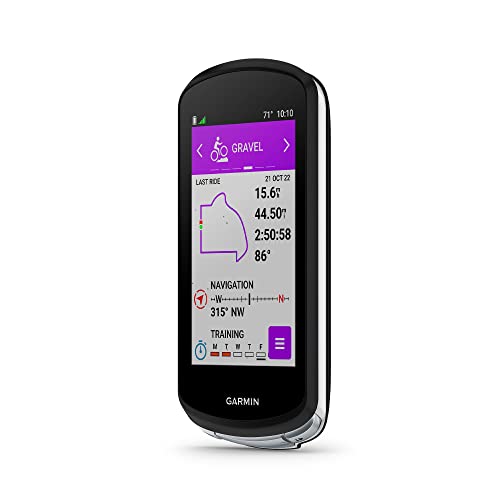
- Solar charging extends battery life for long rides.
- Multi-band GNSS improves positioning accuracy.
- Works with Strava, Komoot, and TrainingPeaks.
Best For: Riders who want premium navigation, endurance, and Strava compatibility.
Premium Ride Hub
Garmin Edge 1050 Cycling Computer

- Vivid touchscreen with strong navigation tools.
- Group ride and safety features via Garmin Connect.
- Built-in speaker and personalized coaching support.
Best For: Cyclists who want a premium, connected ride computer for training and navigation.
Budget Navigation Pick
iGPSPORT BSC500 GPS Bike Computer

- 3.3-inch touchscreen with button backup.
- Imports routes from Strava and Komoot.
- Voice navigation and turn reminders improve guidance.
Best For: Riders who want an affordable touchscreen computer with Strava route import.
Entry-Level Strava Sync

- Tracks core ride data with dual GPS positioning.
- Uploads rides to Strava through the app.
- Automatic backlight and simple setup.
Best For: Entry-level riders who want basic GPS tracking and easy Strava uploads.
Race-Ready Navigation
iGPSPORT BiNavi Air GPS Bike Computer

- 3.0-inch touchscreen with auto brightness
- Offline/online navigation with smart rerouting
- Climb-focused data plus ANT+/Bluetooth support
Best For: Riders who want lightweight navigation, climb data, and Strava syncing
Endurance Adventure Pick
Bryton Rider S810 Touchscreen GPS Computer

- 3.5-inch touchscreen with buttons for rough terrain
- 50-hour battery life for long rides
- Strava Live Segments and automatic app syncing
Best For: Long-distance riders who want Strava Live Segments, offline maps, and marathon battery life
Simple Lightweight Option
CYCPLUS Wireless GPS Bike Computer G1

- 70 g compact design with 2.0-inch screen
- Automatic backlight and IPX6 waterproofing
- 50-hour battery with core ride stats
Best For: Riders who want a compact, lightweight GPS computer with basic ride data and easy visibility
Value Navigation Pick
Bryton Rider 650 2.8" Touchscreen GPS Computer

- 2.8-inch color touchscreen with ambient light sensor
- 33-hour battery life for long rides
- Syncs rides to Strava, TrainingPeaks, and Komoot
Best For: Long rides, commuting, and riders who want easy navigation plus Strava syncing
Offline Map Pick
iGPSPORT BSC300T Touchscreen GPS Bike Computer
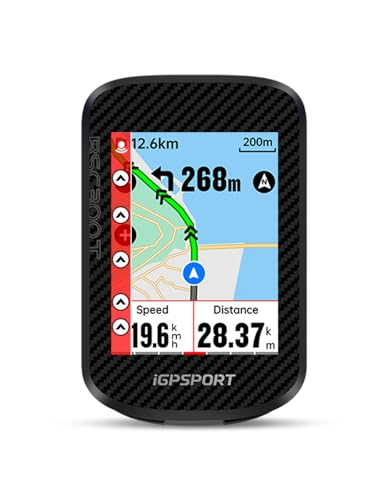
- Offline maps with route preview and turn prompts
- Off-course warning for navigation confidence
- Shares rides to Strava and Komoot
Best For: Riders who want compact navigation tools and easy Strava sharing
Long Battery Pick
COOSPO CS600 Color Touchscreen GPS Computer

- Up to 36 hours of battery life
- Automatic Strava and TrainingPeaks syncing
- Built-in route navigation with breadcrumb trail
Best For: Riders who want long battery life and automatic Strava uploads
Solar-Ready Navigation – Garmin Edge 1040 Solar GPS Bike Computer
If you want a premium bike computer with Strava support and long-haul endurance, the Garmin Edge 1040 Solar is built for serious riding. It combines advanced navigation, performance tracking, and smart connectivity with solar charging to stretch battery life on demanding rides and all-day adventures.
Best For: Riders who want top-tier navigation, training insights, and Strava connectivity with maximum battery life.
Pros:
- Power Glass solar charging can extend battery life up to 100 hours in battery saver mode.
- Multi-band GNSS improves positioning accuracy in challenging environments.
- Supports ride type-specific maps, power guide, and stamina insights with compatible sensors.
- Connects with Strava, Komoot, TrainingPeaks, and other smart-device apps through Garmin Connect.
Cons:
- Many advanced features depend on compatible sensors and the Garmin Connect app.
- Premium capability may be more than casual riders need.
This is a strong fit if you value battery endurance, precise navigation, and training tools in one unit. For riders who regularly upload to Strava and want a feature-rich head unit, it stands out as one of the most capable options here.
Premium Ride Hub – Garmin Edge 1050 Cycling Computer
For riders looking for a premium bike computer with Strava-friendly connectivity and a vivid display, the Garmin Edge 1050 brings a polished ride experience. It focuses on navigation, group ride features, coaching, and on-device convenience, making it a strong pick for riders who want more than basic tracking.
Best For: Cyclists who want a feature-packed premium computer for navigation, coaching, and connected riding.
Pros:
- Vivid color touchscreen makes route creation and ride data easy to view.
- Supports group ride messaging, live locations, and incident detection with a compatible smartphone and Garmin Connect app.
- Built-in speaker adds workout and navigation prompts plus an on-device bike bell.
- Power guide, ClimbPro, and personalized coaching help structure training and rides.
Cons:
- Battery life tops out at 20 hours in demanding use cases.
- Several connected features require a compatible smartphone and accessories.
If you want a high-end bike computer that emphasizes ride awareness, navigation, and training support, the Edge 1050 is easy to recommend. It also fits riders who want a smart, connected device that can sync into broader cycling apps and workflows.
Budget Navigation Pick – iGPSPORT BSC500 GPS Bike Computer
The iGPSPORT BSC500 is a practical bike computer with Strava import support for riders who want navigation and training features without moving into premium pricing. Its large touchscreen, voice prompts, and route planning tools make it useful for everyday riding and course follow-through.
Best For: Riders who want an affordable touchscreen bike computer with route import and navigation support.
Pros:
- 3.3-inch touchscreen supports both touch and button operation.
- Route import works with Strava, Komoot, and direct route files through the app.
- Dual-band and five-satellite positioning improves navigation accuracy.
- Voice navigation, turn reminders, and yaw planning help keep rides on track.
Cons:
- Battery and feature depth are more modest than premium Garmin units.
- Some advanced route and training functions depend on the companion app.
For riders who mainly want a simple way to follow routes and bring in Strava files, the BSC500 covers the essentials well. It offers a lot of navigation utility for the price, especially if you prefer a touchscreen interface.
Entry-Level Strava Sync – COOSPO BC26 GPS Bike Computer
If you want a straightforward bike computer with Strava upload support, the COOSPO BC26 keeps things simple. It focuses on core ride data, dual GPS positioning, and easy app-based syncing, which makes it a sensible entry-level choice for riders who just want the essentials.
Best For: Entry-level riders who want basic GPS tracking and simple Strava syncing.
Pros:
- Displays core ride metrics like speed, distance, cycling time, and altitude.
- Dual GPS positioning can track rides and upload them to Strava.
- CoospoRide app helps with setup, route loading, recording, analysis, and firmware updates.
- Automatic backlight improves readability in changing light.
Cons:
- Does not support pairing with sensors.
- Not intended for indoor riding.
- Function set is more basic than higher-end bike computers.
The BC26 is best viewed as a no-fuss starter unit for riders who mainly want GPS recording and Strava compatibility. It gives you the basics without adding complexity, which is exactly what some riders need.
Race-Ready Navigation – iGPSPORT BiNavi Air GPS Bike Computer
If you want bike computers with strava support and strong navigation features, the iGPSPORT BiNavi Air is built for riders who care about route guidance, climb data, and low cockpit weight. Its 3.0-inch touchscreen combines map view and ride metrics, while the physical buttons help keep control in rain or with gloves.
Best For: Riders who want lightweight navigation, climb data, and Strava syncing in a compact unit.
Pros:
- 3.0-inch touchscreen with automatic brightness adjustment for day and night visibility
- Flagship navigation with offline/online route support and fast rerouting if you miss a turn
- iClimb 3.0 shows upcoming gradient, distance, and elevation data on the map
- Supports ANT+ and Bluetooth sensors, plus smart trainer and indoor workout features
Cons:
- Smaller display than some larger touchscreen cycling computers
- Touch controls may still be less ideal than buttons alone in very rough conditions
- Best fit is navigation and climbing, not a stripped-down basic head unit
This is a strong pick if you want a lightweight GPS computer that does more than record speed and distance. The BiNavi Air focuses on practical route handling, climbing insight, and broad sensor compatibility, making it a solid choice for performance-minded riders.
Endurance Adventure Pick – Bryton Rider S810 Touchscreen GPS Computer
For bike computers with strava compatibility and a big battery, the Bryton Rider S810 is aimed at riders who spend long hours on the bike. Its 3.5-inch color touchscreen, physical buttons, and offline navigation make it practical for gravel, bikepacking, and all-day rides.
Best For: Long-distance riders who want Strava Live Segments, offline maps, and marathon battery life.
Pros:
- Large 3.5-inch touchscreen with adaptive light sensor for outdoor readability
- Impressive 50-hour battery life for long rides and multi-day trips
- Strava Live Segments plus Climb Challenge 2.0 for pacing and climb awareness
- Synchronizes ride data to Strava, TrainingPeaks, and Komoot through the app
Cons:
- Device-only package means you supply your own sensors and accessories
- Larger screen and feature set may be more than casual riders need
- Designed around endurance and exploration, so it may feel overbuilt for simple ride tracking
The S810 stands out when battery life and navigation matter more than keeping things minimal. If you want a feature-rich computer that can handle remote routes and still connect your training platform afterward, this is an easy one to shortlist.
Simple Lightweight Option – CYCPLUS Wireless GPS Bike Computer G1
If you want bike computers with strava-style ride recording support without a lot of bulk, the CYCPLUS G1 keeps things simple. It offers GPS tracking, a clear sunlight-readable screen, and a lightweight wireless design that suits riders who mainly want core ride stats.
Best For: Riders who want a compact, lightweight GPS computer with basic ride data and easy visibility.
Pros:
- Very light 70 g design with a compact 2.0-inch display
- Automatic backlight and FSTN screen for visibility in sunlight and at night
- Wireless, IPX6 waterproof build with a large battery rated for 50 hours
- Tracks core ride metrics like time, distance, mileage, altitude, and clock
Cons:
- No touchscreen or advanced navigation features
- Display is smaller and more basic than larger premium bike computers
- Best suited to fundamental ride data rather than deep training or route planning
The G1 is a straightforward pick for riders who want a lightweight head unit that handles the essentials well. It is less feature-packed than the other two, but that simplicity is exactly what some cyclists want.
Value Navigation Pick – Bryton Rider 650 2.8" Touchscreen GPS Computer
If you want bike computers with Strava support without paying flagship prices, the Bryton Rider 650 keeps the formula straightforward: a color touchscreen, long battery life, and easy ride syncing through the Bryton Active app. It’s geared toward riders who want reliable navigation and post-ride uploads rather than a race-only display.
Best For: Long-distance riders, commuters, and budget-conscious cyclists who want turn-by-turn navigation plus Strava syncing.
Pros:
- 2.8-inch color touchscreen with ambient light sensor for easier visibility
- Up to 33 hours of battery life for extended rides and touring
- Preloaded OSM maps with turn-by-turn guidance, street names, and POIs
- Syncs rides to Strava, TrainingPeaks, and Komoot via the Bryton Active app
Cons:
- Touchscreen-first design may not suit riders who prefer a simpler button-only interface
- No strong emphasis on advanced training features beyond the core essentials
The Rider 650 stands out as a practical all-around GPS unit for riders who care more about dependable navigation and smooth Strava syncing than premium race-level extras. Its battery life and map tools make it especially appealing for everyday use and longer weekend rides.
Offline Map Pick – iGPSPORT BSC300T Touchscreen GPS Bike Computer
The iGPSPORT BSC300T is a strong option for bike computers with Strava support if you want offline maps, off-course alerts, and a lightweight unit that works across road, MTB, and e-bike use. It pairs route navigation with broad sensor compatibility, making it useful for riders who like more data without a bulky setup.
Best For: Riders who want offline maps, route warnings, and Strava sharing in a compact touchscreen computer.
Pros:
- 2.4-inch touchscreen plus 6-button control for flexible operation
- Offline map download with route preview and turn prompts
- Off-course warning helps keep you on planned routes
- Syncs ride data to Strava and Komoot through the iGPSPORT app
Cons:
- 20-hour battery life is shorter than some longer-endurance competitors
- Type-C cable is not included in the box
This model makes sense for riders who value navigation confidence and easy sharing over maximum battery runtime. The combination of offline mapping, multi-satellite support, and Strava syncing gives it a well-rounded feature set for everyday training and adventure riding.
Long Battery Pick – COOSPO CS600 Color Touchscreen GPS Computer
For cyclists shopping bike computers with Strava support, the COOSPO CS600 focuses on battery life, route navigation, and a customizable display. It’s built to make everyday riding and training easier, with automatic syncing to Strava through the COOSPORIDE app and enough endurance for multi-day use.
Best For: Riders who want a long-lasting touchscreen GPS computer with route navigation and automatic Strava syncing.
Pros:
- 2.4-inch color touchscreen with auto-backlight for better visibility
- Up to 36 hours of battery life for longer rides and trips
- Built-in route navigation with upload support and breadcrumb trail following
- Automatically syncs ride data to Strava and TrainingPeaks via the COOSPORIDE app
Cons:
- Cadence, heart rate, and power tracking require compatible accessories sold separately
- Heavier than some compact alternatives at 120 g
The CS600 is a good fit if you want a simple but capable GPS computer that covers navigation, data, and sharing without much fuss. Its longer battery life and automatic Strava sync make it especially appealing for riders who log a lot of miles.
How We Picked the Best Bike Computers with Strava
We prioritized Bike Computers with Strava compatibility, reliable GPS performance, useful navigation tools, and clear display quality. We also looked at battery life, water resistance, sensor support, and how well each unit fits real-world riding, from short commutes to all-day events.
Quick Comparison
As you compare the list, think about whether you need advanced mapping, basic ride data, or training-focused metrics. Premium units tend to offer larger screens, longer battery life, and stronger route guidance, while entry-level models usually cover speed, distance, and simple syncing at a lower price.
Key Buying Factors for Bike Computers with Strava
Strava Sync and App Support
Make sure the device can upload rides easily through its companion app or connected services. For most riders, the best experience is automatic syncing with minimal setup after each ride.
Navigation and Mapping
If you follow routes or ride in unfamiliar areas, look for offline maps, turn-by-turn directions, rerouting, and off-course alerts. These features matter more than extra data fields for many cyclists.
Display, Controls, and Readability
A bright screen and intuitive controls are essential outdoors. Touchscreens are convenient, but physical buttons can be easier in rain, gloves, or rough conditions.
Battery Life and Durability
Long rides and bikepacking trips call for stronger battery performance. Also check waterproofing and charging behavior, especially if you ride in mixed weather or rely on frequent navigation.
Sensor and Accessory Compatibility
Many Bike Computers with Strava work best when paired with heart rate monitors, cadence sensors, power meters, or radar units. If you plan to train seriously, confirm ANT+ and Bluetooth support before buying.
Who Should Buy Which Bike Computers with Strava?
Choose a premium model if you want advanced navigation, long battery life, and deeper training insights. Midrange options are ideal for riders who want dependable GPS, mapping, and strong value. Entry-level computers suit commuters and recreational riders who mainly need ride tracking, speed, and simple Strava uploads without paying for extra features.
If you are upgrading from a basic bike computer, focus first on the features you will use every ride. The best pick is usually the one that makes tracking, navigating, and syncing feel effortless.