The best running backpack with change of clothes compartment helps you move from training to work, travel, or a post-run shower without carrying a separate duffel. The options in this roundup range from compact hydration vests to larger transition packs with dedicated storage.
We compared capacity, hydration support, organization, comfort, weather resistance, and practical features to help you choose the right pack for commuting, races, trail runs, and everyday workouts.
Best 10 Running Backpack with Change of Clothes Compartment Picks for 2026
Lightweight Hydration Vest
Zacro Running Pack with 2L Bladder

- Includes a 2L leak-proof TPU water bladder
- Six pockets with two secure zippered compartments
- Adjustable, ventilated, and reflective vest design
Best For: Runs and races focused on hydration and essentials
Triathlon Transition Pack

- Waterproof lower compartment isolates wet race gear
- 35L capacity for clothing, shoes, helmet, and nutrition
- Top access, bottle pockets, and helmet carrier aid organization
Best For: Triathlon transition days and full race-day gear
Best High-Capacity Pick

- 12L storage with large back pockets for extra layers
- Includes a 2L BPA- and PVC-free bladder
- Adjustable, breathable, and reflective design
Best For: Long runs and outdoor activities requiring extra clothing and gear
Best Lightweight Clothing Storage

- Dual rear zippered compartments are designed for clothes
- Lightweight 5L version weighs 0.48 lb
- Eight-pocket layout with adjustable anti-bounce fit
Best For: Shorter runs and workouts with a light change of clothes
Best Compact Hydration Option

- Back pockets hold a bladder, towel, or extra clothing
- Includes a 2L BPA- and PVC-free hydration bladder
- Reflective, breathable construction with adjustable fit
Best For: Short trail runs and rides with hydration and one spare layer
Lightweight Hydration Pick

- 140g lightweight design
- Includes 1.5L water bladder
- Breathable mesh with reflective trim
Best For: Short runs, cycling, and compact hydration carry
Most Versatile Storage
Blue Quartz 3-in-1 Running Vest
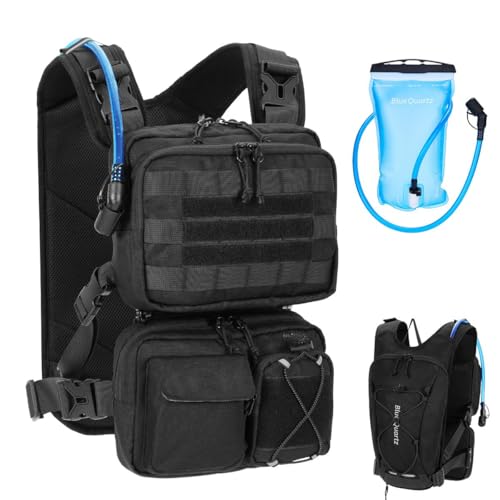
- 12L total capacity
- Detachable chest and waist pack
- Includes 2L hydration bladder
Best For: Longer outings requiring clothing and organized gear storage
Organized Endurance Carry

- 5L capacity with eight pockets
- Includes BPA-free 2L bladder
- Adjustable, padded mesh fit
Best For: Runs and rides needing organized hydration and essentials
Packable Wet-Dry Daypack – Foldable 35L Backpack
If you need a running backpack with change of clothes compartment for travel, outdoor workouts, or post-run commutes, this foldable 35L pack offers a practical clean-and-dirty layout. Its separate PEVA-lined wet-clothes pocket helps isolate damp gear, while the lightweight ripstop construction packs down for storage.
Best For: Runners, travelers, and outdoor users who want high capacity, wet-clothes separation, and a packable design.
Pros:
- Separate zipper compartment helps keep wet or dirty clothes away from clean items.
- Large 30L storage capacity with a stated maximum weight recommendation of 30 pounds.
- Lightweight, foldable, machine-washable design with reflective details for low-light visibility.
Cons:
- Its larger daypack shape may feel less streamlined than a dedicated running vest.
- The notes do not specify padded back support or a bladder system.
This is a versatile option when carrying a full change of clothes matters more than minimizing pack size during a run. The wet/dry separation and packability make it especially useful for gym-to-work or travel routines.
Lightweight Hydration Vest – Zacro Running Pack with 2L Bladder
For runners prioritizing hydration and a bounce-resistant fit, this vest-style running backpack with change of clothes compartment provides a compact alternative to a traditional daypack. It includes a 2L TPU bladder, six storage pockets, ventilated mesh, and reflective elements, but its notes do not identify a dedicated wet-clothes compartment.
Best For: Road and trail runners who need hands-free hydration, small-item storage, and a lightweight fit.
Pros:
- Includes a 2L food-grade, leak-proof TPU water bladder for hands-free drinking.
- Adjustable chest and waist straps are designed to reduce shifting, slipping, and bounce.
- Six pockets, including two zippered slots, organize phones, gels, keys, and small gear.
- Ventilated mesh and reflective front, rear, and logo details support comfort and visibility.
Cons:
- The 2L capacity is intended for hydration and essentials, not a full change of clothes.
- No dedicated wet or dirty-clothes compartment is listed in the supplied details.
This vest is best viewed as a hydration-first running pack rather than a true change-of-clothes carrier. Choose it for races and shorter outings where bounce control and fluid access matter more than separating apparel.
Triathlon Transition Pack – SLS3 35L Wet-Dry Backpack
Among running backpack with change of clothes compartment options, this 35L triathlon transition bag is built specifically around wet gear and race-day organization. Its waterproof lower compartment isolates a wetsuit, muddy shoes, or other damp kit from clean clothes and electronics, while the structured design carries a larger transition load.
Best For: Triathletes and runners transporting wet gear, shoes, a helmet, clothing, and race accessories.
Pros:
- Waterproof bottom compartment separates wet gear from the dry main compartment.
- 35L capacity accommodates a helmet, wetsuit, bike shoes, run kit, nutrition, and changing clothes.
- Top-access storage, bottle pockets, outer zip pocket, and pull-out helmet carrier improve organization.
- Padded breathable back panel and supportive straps are designed for carrying a full load.
Cons:
- The 35L structured design is considerably larger than a minimalist running vest.
- It is water resistant overall, rather than described as completely waterproof throughout.
- Cleaning is limited to brushing or wiping and natural drying, according to the care instructions.
This is the strongest match for users who need genuine wet/dry separation and enough room for a full race-day wardrobe. Its organization favors transition areas and travel over lightweight everyday running.
Compact Hydration Vest – INOXTO 3L Running Pack
This compact running backpack with change of clothes compartment is designed primarily for hydration and small essentials rather than carrying a full outfit. The INOXTO vest weighs 190 grams, uses adjustable chest and waist straps, and provides a 3L main compartment alongside bottle and phone storage.
Best For: Marathoners, trail runners, and hikers who need lightweight hydration with room for small personal items.
Pros:
- Lightweight 190-gram construction with contoured, adjustable chest and waist fit.
- 3L main capacity plus shoulder bottle pockets and a phone or stash pocket.
- Supports a 1.5L or 2L food-grade water bag with a long drinking tube.
- Reflective details and a safety whistle add visibility and emergency utility.
Cons:
- The supplied details do not confirm a separate wet- or dirty-clothes compartment.
- Its 3L capacity may not accommodate bulky shoes or a complete change of clothes.
- Water-bladder capacity can vary between the stated 1.5L and 2L options.
This vest makes sense when your “change of clothes” needs are limited to a lightweight layer or small apparel items. For a complete outfit or damp post-run gear, a larger wet-dry backpack would be more suitable.
Best High-Capacity Pick – Zelvot 12L Running Vest
If you need a running backpack with change of clothes compartment, the Zelvot 12L vest offers useful room for extra layers or a towel alongside a 2L bladder. Its multiple pockets and adjustable fit make it suited to longer outings where compact storage is not enough.
Best For: Trail runners, marathoners, hikers, and cyclists carrying extra clothing and hydration.
Pros:
- 12L capacity with two large back pockets for a bladder, towel, or extra layers.
- Includes a 2L BPA- and PVC-free water bladder with a high-flow bite valve.
- Adjustable shoulder straps and waist belt help reduce bounce and shifting.
- Water-resistant 900D Oxford front fabric, breathable mesh, and reflective details.
Cons:
- The larger 12L design may feel like more pack than short runs require.
- The included holster and gear-focused features may not suit every runner.
This is the strongest choice here for runners who prioritize carrying capacity. Choose it when spare clothing and other trail essentials matter as much as hydration.
Best Lightweight Clothing Storage – BECOJADDE 5L Running Vest
For runners seeking a lightweight running backpack with change of clothes compartment, the BECOJADDE vest provides dual rear zippered compartments specifically described for clothing. Its 5L format keeps the load modest while leaving space for essentials and hydration.
Best For: Marathoners, joggers, and hikers who want dedicated clothing storage in a lightweight vest.
Pros:
- Dual rear zippered compartments organize clothes separately from smaller items.
- Lightweight 5L version weighs 0.48 lb before adding hydration.
- Eight-pocket layout includes phone, key, snack, stash, utility, and bottle pockets.
- Adjustable chest and dual waist straps, tube clip, and securing loops help limit bounce.
Cons:
- The 5L capacity is less suitable for bulky clothing or extensive gear.
- The supplied listing presents multiple size and hydration configurations, so the selected option matters.
Among these options, this vest offers the clearest clothing-focused organization in a compact package. It is a practical match for active users carrying a light change of clothes rather than substantial layers.
Best Compact Hydration Option – Zelvot 2L Gear Vest
The Zelvot 2L vest is a compact option for anyone comparing a running backpack with change of clothes compartment for shorter outings. Its two large back pockets can hold extra clothing or a towel while the front pockets keep smaller running essentials accessible.
Best For: Trail runners and cyclists who need hydration, spare clothing, and organized gear without a high-capacity pack.
Pros:
- Two large back pockets accommodate a water bladder, towel, or extra clothing.
- Includes a 2L BPA- and PVC-free bladder with hands-free bite valve.
- Waterproof front zip pockets protect essentials such as a phone, keys, and gels.
- Available chest adjustment ranges and adjustable waist straps support a secure fit.
Cons:
- The listed 2L capacity limits how much clothing and gear can be carried.
- Its tactical holster and pen slot may be unnecessary for everyday runners.
This vest balances hydration and basic clothing storage in a streamlined design. It makes more sense for runners carrying one spare layer than for trips requiring a full change of clothes.
Lightweight Hydration Pick – INOXTO 1.5L Running Vest
If you want a running backpack with change of clothes compartment for short, lightweight outings, the INOXTO is better suited to hydration and small essentials than a full clothing load. It weighs just 140 grams and includes a 1.5L bladder, front pockets, and breathable mesh for active use.
Best For: Runners and cyclists prioritizing low weight, hydration, and compact storage.
Pros:
- Very light 140-gram construction.
- Includes a 1.5L water bladder and bottle pockets.
- Breathable mesh, adjustable straps, and reflective trim support comfortable use.
- Four pockets provide access to phones, keys, gels, and other small items.
Cons:
- The listed 1.5L capacity is limited for carrying a change of clothes.
- Its vest-style design is intended more for essentials and hydration than larger loads.
The INOXTO is a practical choice when a compact hydration vest matters more than clothing capacity. Buyers specifically seeking a running backpack with change of clothes compartment should consider its limited storage before choosing it.
Most Versatile Storage – Blue Quartz 3-in-1 Running Vest
The Blue Quartz is the strongest match here for shoppers seeking a running backpack with change of clothes compartment, thanks to its stated 12-liter capacity and modular storage. Its detachable waist pack, chest storage, and 2L bladder compartment make it adaptable for longer outings.
Best For: Runners, hikers, and cyclists who need higher capacity and configurable storage.
Pros:
- 12-liter capacity offers more room for clothing and activity gear.
- 3-in-1 design combines backpack, chest pack, and detachable waist pack.
- Dedicated rear compartment holds the included 2L bladder.
- Ten pockets, elastic loops, and MOLLE webbing support organized storage.
Cons:
- More modular components may be bulkier than a minimal hydration vest.
- The supplied notes do not specify a dedicated garment-only compartment.
With the largest stated capacity in this group, the Blue Quartz is the most practical option for carrying extra layers or a change of clothes while keeping hydration accessible. Its modular layout also lets you adjust the load for different activities.
Organized Endurance Carry – Criuage 2L Hydration Vest
The Criuage is a compact endurance vest for shoppers comparing a running backpack with change of clothes compartment. Its 5-liter capacity and eight pockets can accommodate hydration, towels, a helmet, and personal essentials, although the supplied specifications do not confirm a dedicated clothing compartment.
Best For: Endurance athletes who want structured front-and-back organization with hydration.
Pros:
- Includes a BPA-free 2.0L PEVA water bladder.
- Eight pockets divide storage between front-facing and back compartments.
- Adjustable straps and wide mesh shoulder padding support a secure fit.
- Water-resistant nylon construction is suited to running, cycling, hiking, and travel.
Cons:
- At 5 liters, capacity is more limited than the Blue Quartz model.
- The 750-gram listed weight is heavier than the 140-gram INOXTO.
- No dedicated change-of-clothes compartment is specified.
The Criuage offers useful organization for hydration, towels, snacks, and small electronics, but it is not the best choice for a bulky clothing load. Choose it when fit, pocket access, and a 2L bladder matter more than maximum capacity.
How We Picked the Best Running Backpack with Change of Clothes Compartment
We focused on how well each pack handles the needs of runners who carry a change of clothes, rather than judging it only as a hydration vest. Capacity, compartment layout, hydration compatibility, fit, ventilation, and access to essentials were central considerations. We also looked for useful details such as reflective accents, gear holders, insulated storage, detachable pouches, and water-resistant or waterproof construction.
Because “change of clothes” can mean anything from a clean shirt and socks to a complete post-workout outfit, the selection includes both lightweight vests and larger transition-style backpacks. Product specifications and stated features should be checked before purchase, especially compartment dimensions and bladder compatibility.
Quick Comparison
| Pack type | Best for | Typical capacity | What to prioritize |
|---|---|---|---|
| Hydration vest | Short runs and races | Small to medium | Stable fit, bounce control, and easy-access pockets |
| Mid-size running pack | Commutes and longer outings | Medium | Clothing space, ventilation, and bladder capacity |
| Transition backpack | Triathlon and full outfit changes | Large | Separate compartments, durable materials, and organization |
| Convertible pack | Flexible daily use | Small to medium | Detachable storage, adjustable fit, and versatility |
Key Buying Factors for a Running Backpack with Change of Clothes Compartment
Capacity and Compartment Design
A compact vest may hold a shirt, socks, and lightweight shorts, while a larger 30- to 35-liter transition bag can accommodate shoes, toiletries, a towel, and extra layers. Look for a dedicated clothing area or a wide main opening that makes packing easier. A separate wet compartment is especially useful for sweaty garments.
Hydration and Storage Balance
Many running packs include a 1.5- or 2-liter bladder, while some support larger reservoirs or bottles. Confirm whether the bladder is included and whether the hose routes securely. More hydration capacity can add weight, so match it to your route and access to refill points.
Fit, Comfort, and Stability
Adjustable sternum and waist straps help prevent bouncing when the pack is loaded. Breathable mesh, padded contact areas, and a close-fitting vest design improve comfort in warm weather. Try to distribute heavier items close to your back and avoid overpacking the front pockets.
Weather Protection and Visibility
Water-resistant fabric can protect clothing from light rain, but it is not always fully waterproof. For early-morning or evening use, reflective panels and bright colors improve visibility. Check zippers and seams if your route regularly includes heavy rain.
Who Should Buy Which Running Backpack with Change of Clothes Compartment?
Choose a lightweight hydration vest if you mainly need water, snacks, a phone, and a minimal clothing layer for races or short runs. Pick a mid-size pack if you commute by foot, run before work, or need room for a clean outfit and personal items. A larger triathlon-style backpack is the better choice for complete changes of clothes, shoes, towels, and organized transition storage.
If flexibility matters most, consider a design with detachable storage or multiple carry options. Whichever style you choose, measure your intended clothing bundle, verify the listed capacity, and prioritize a secure fit over maximum volume.